Urine Smell in a Plastic Litter Box
You emptied it. You washed it. You put your face near it because you could not quite believe it, and there it was again. This is the point where most people blame the litter.
Disclosure: Purrify is our product, and we may benefit if you buy it. Details
Why Washing Keeps Failing
A new litter box is smooth. Run your hand around the inside of one that has been in service a year and it feels different: faintly rough, dull where it used to shine, sometimes visibly grooved in an arc where the scoop always lands. Every one of those grooves is a place a cloth cannot reach.
Urine residue settles into that texture and dries there. When you wipe the box, you clean the flat plastic in between and leave the grooves loaded. The box smells fine while it is wet, because water holds the smell down. Then it dries, the residue is exposed again, and you are back where you started, usually within a day.
The other half of the story is bacteria. The same breakdown process that makes a used box smell of ammonia keeps running on residue stuck in the pan, which is why an unwashed box gets worse rather than staying level. The chemistry is laid out in why litter boxes smell so bad, and the diagnosis path for a live ammonia smell is in ammonia smell from the litter box.
The Wash That Actually Works
This takes about fifteen minutes, most of which is waiting. Do it outside or in a tub you are willing to disinfect afterwards, and keep a second box or a temporary tray available so your cat is never without somewhere to go.
Empty the pan completely and bag the litter. Do not tip old litter down a drain and do not leave the bag in the room you are trying to fix.
Rinse with the hottest tap water you can handle. This lifts the loose material before soap goes anywhere near it.
Squeeze dish soap straight onto the pan and scrub with a stiff brush kept only for this job. Work in circles, not straight lines, so the bristles cross the scratch pattern instead of riding along it.
Do the sides and the rim, not just the floor of the box. Urine splashes, and the rim is where hands and hoods make contact.
Fill the pan with hot soapy water and leave it to soak while you clean the scoop, the mat, and the floor around the box.
Rinse until the water runs clear and there is no soap film left anywhere.
Dry it fully. Sunlight and open air are ideal. A pan put back damp goes sour faster than one that started dirty.
Smell it dry. This is the real test, and it is the step nearly everyone skips.
If you want this as a standing monthly routine rather than a rescue operation, the full version lives in the deep clean walkthrough.
What Never Goes On a Litter Box
Some of these damage the plastic and make the smell permanent. One of them is a genuine safety hazard. Read that one twice.
Bleach onto a dirty box
Never mix bleach with a urine-soaked pan or with any ammonia-containing cleaner. The combination releases dangerous gas. Wash and rinse first, always.
Abrasive scouring cream and steel wool
They cut fresh scratches into the plastic, which is exactly the surface you are trying not to create.
Strongly scented cleaners
Perfume left in the pan sits on top of ammonia rather than removing it, and plenty of cats refuse a box that smells like a cleaning aisle.
Pine or citrus concentrates
Cats commonly avoid these smells, and a cat that avoids the box finds somewhere worse.
The dishwasher
Hot cycles can warp a thin pan, and most people do not want that machine used for it afterwards.
A quick wipe with a disinfecting wipe
It cleans the flat plastic and misses everything in the scratches, which is where the smell lives.
When the Pan Is Simply Done
There is a point past which a box cannot be saved, and holding onto it costs more than a new one. Three tests tell you where you are.
- The fingernail test. Drag a nail across the inside floor. Catching and grabbing means a scratch network deep enough to hold residue for good.
- The dry test. Wash it properly, dry it completely, and smell it. A clean, fully dry pan that still smells sour is finished.
- The speed test. If the smell is back within a day of a full wash and fresh litter, the pan is reseeding it faster than you can clean it.
Replacing a pan is one of the cheapest fixes in this entire subject. It is certainly cheaper than a cat that decides the box is unpleasant and picks a rug instead, and that decision is hard to reverse once it is made.
Keeping the Next Box Smelling New
Everything that scratches the plastic or lets urine reach it shortens the pan's life. Four habits do most of the work.
Keep the litter deep enough
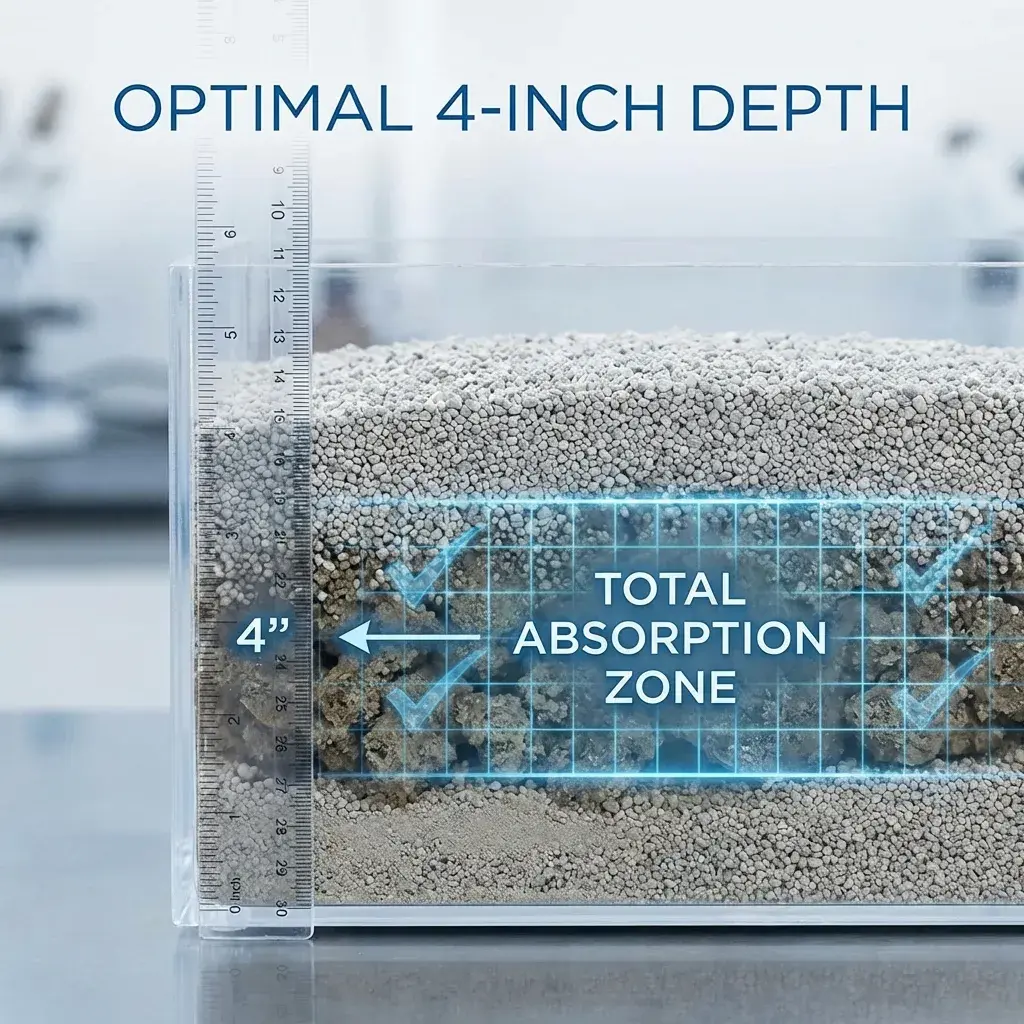
At 3 to 4 inches, urine balls up before it reaches the bottom. Shallow litter puts every drop straight onto plastic and puts your scoop there too.
Scoop gently
Lift and sift rather than dragging the scoop along the floor of the pan. Most scratching comes from that dragging motion.
Change the litter on a schedule
Sitting in old litter is the fastest way to load a pan with residue. Our schedule guide sets a cadence you can actually keep.
Wash the hood too
Covered boxes have twice the plastic and the hood usually gets washed half as often, if that.
The cadence itself is in how often to change cat litter, and the hood question is covered in covered versus uncovered litter box smell. Choosing a litter that clumps firmly enough to lift cleanly makes all of this easier, which is the point of best cat litter for ammonia smell.
When Purrify Fits
Once the pan is clean and dry, the job shifts to keeping odor from building back up between scoops. Purrify is an activated carbon additive that traps odor molecules coming off the litter, which means less residue drifting around and settling into the plastic. It belongs on a clean box, not as a way to postpone washing one.
See Purrify (our product)FAQ
Why does my litter box still smell after I wash it?
Because the smell is not sitting on the surface any more. Scooping leaves fine scratches all over the pan, and urine residue settles into them. A quick wash cleans the flat plastic between the scratches and leaves what is inside them, so the box smells clean while wet and sour again once it dries.
Does plastic absorb cat urine?
Not the way a carpet does. What happens is mechanical: months of scooping leave a fine network of scratches, and residue lodges in there where a cloth cannot reach. A brand new pan does not hold smell. A well-used one does.
Can I use bleach on a litter box?
Diluted bleach is used on litter boxes, but only on a pan that is already washed clean and thoroughly rinsed. Never let bleach meet a urine-soaked box or any ammonia-containing cleaner, because that combination gives off dangerous gas. If you are not confident about the rinse, skip bleach entirely and use dish soap and hot water.
How do I know when a litter box needs replacing?
Run a fingernail across the inside. If you can feel the scratches, residue can hide in them. If the pan smells sour once it is completely dry after a proper wash, it has reached the end. Replacing a pan is far cheaper than replacing a rug your cat started using instead.
Do liners stop the plastic from smelling?
They can slow the scratching, which is the real cause, but many cats tear liners while digging, and a punctured liner traps urine underneath where you cannot see it. If you use one, check under it every time you change the litter.
Washed It and the Room Still Smells?
Then the pan was not the source. Take the search to the floor, the wall, and the mat with the phantom urine smell guide.
Compare the Full Product Stack
For broader buying options, use the cat litter comparison. For odor at the source, see Purrify's carbon additive.
Keep Going
The three guides people read next after fixing a smelly pan.