Cat Litter Pregnancy Safety
The worry here is a parasite called Toxoplasma, not ordinary litter odor. Everything below comes down to one idea: keep cat feces away from your mouth, and do not let the box sit.
Reviewed by Dr. James Chen, Veterinary Reviewer
Health and safety claims checked against authoritative sources. How we source
Disclosure: Purrify is our product, and we may benefit if you buy it. Details

Medical note: This page is educational and is not a substitute for care from your OB-GYN, midwife, physician, or veterinarian. If you are pregnant, trying to conceive, immunocompromised, or worried about an exposure that already happened, ask your healthcare provider what applies to you. Nothing here is a diagnosis.
What Toxoplasmosis Actually Is
Toxoplasmosis is an infection caused by a parasite, Toxoplasma gondii. It is common around the world, and most people who get it never feel a thing. Some have a stretch of flu-like symptoms: swollen glands, muscle aches, feeling wiped out for a few weeks. It usually passes on its own in an otherwise healthy adult.
Cats matter because they are the only animals that pass the parasite in their stool in a form that can go on to infect people. A cat normally picks it up by hunting or by eating raw or undercooked meat. After that first infection it sheds the parasite for a short window, roughly a couple of weeks, and then usually never again. That is why a long-settled indoor cat on commercial food is a very different picture from a kitten that just came in off the street.
One detail does most of the work on this page. What comes out of the cat is not infectious right away. CDC guidance says it takes one to five days after it is shed to become infectious. Litter that leaves the house every day never gets to that stage, which is why the advice is always the same two words: change daily.
It is also worth knowing where most human infections actually come from. Health agencies point out that people are more likely to be infected by undercooked meat or unwashed produce than by a litter box. The litter box gets the attention, but the kitchen deserves the same care.
Why Pregnancy Changes The Math
For most healthy adults, a Toxoplasma infection is a non-event. Pregnancy is the exception. A first infection during pregnancy can be passed to the baby, and congenital toxoplasmosis can cause serious problems, including damage to the eyes and the brain. Some babies show nothing at birth and develop problems later. That is the whole reason for the gloves and the daily scooping.
The word doing the heavy lifting is first. Someone infected well before pregnancy is generally not considered to be at that risk, because the immune system has already met the parasite. A blood test can show whether you have been exposed before. Whether that test is worth doing in your case depends on your history and on where you live, so it is a question for your doctor or midwife rather than a decision to make from a website.
The same extra caution applies if your immune system is suppressed for any reason. Toxoplasmosis behaves differently in that situation, and the person managing your care should be the one setting the rules.
Who Should Actually Scoop
Best option: someone else scoops
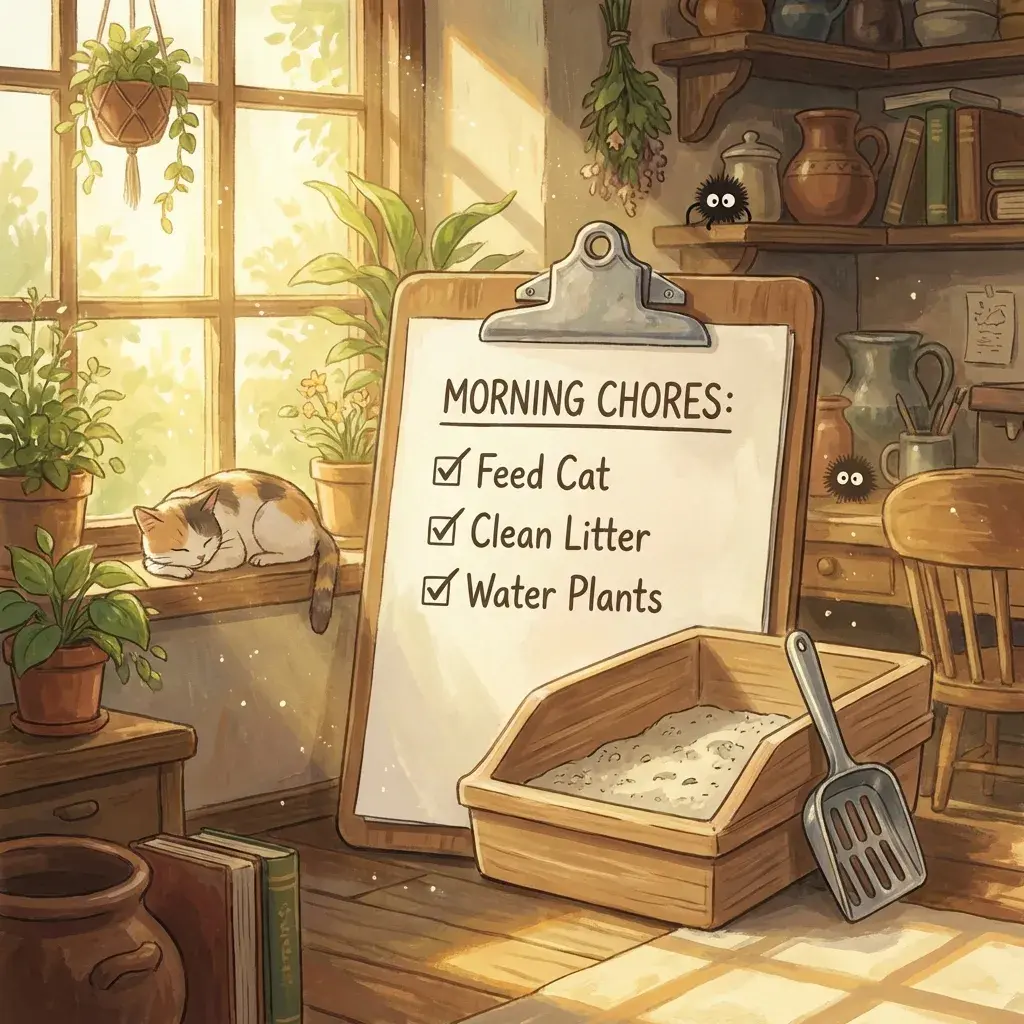
Another adult in the house takes the box for the whole pregnancy. It costs you nothing and it removes the contact entirely. Put it in writing on the fridge if you have to, because a job nobody owns is a job nobody does.
If you have to do it yourself
Disposable gloves, litter changed every day, hands away from your face, then soap and water for a full wash. Plenty of people scoop through a pregnancy this way. The precautions are simple and they are the same ones public health agencies give.
If you feel sick doing it
Nausea and a strong litter box are a bad match. Hand the job over, move the box somewhere with better airflow, or split it up: someone else scoops, you handle the parts that keep you away from the waste.
Single-person households are the awkward case, and pretending otherwise helps nobody. If you live alone with your cat, you are the one scooping. Do it with gloves, do it every day, wash your hands like you mean it, and tell your provider that this is your situation so they can weigh in.
The Safer Daily Routine
Eight steps, in order of how much they matter. None of them are difficult, and none of them require buying anything unusual.
- 1
Hand the job off if you can
The lowest-contact option is simple. Someone else in the household changes the litter box until after the baby arrives. Nothing else on this list beats it.
- 2
Change the litter every day
CDC guidance is to change the litter box daily, because the parasite in cat feces does not become infectious right away. It needs one to five days after it is passed. Removing waste every day means it leaves the house before it can become a problem.
- 3
Wear disposable gloves, every time
Gloves for scooping, for tying off the waste bag, and for washing the box. Peel them off inside out and bin them. Reusable gloves are worse here, because they get set down on counters and picked up again.
- 4
Keep your hands away from your face
No rubbing your eyes, no pushing hair back, no answering a snack halfway through. The parasite is swallowed, so the route into you runs through your hands and your mouth.
- 5
Wash properly afterward
Soap, warm water, both hands, backs and nails included, even though you wore gloves. Do it before you touch food, a phone, or a door handle.
- 6
Keep the box out of the kitchen
A litter box near where food is made or eaten makes cross-contact more likely and makes the room smell worse. A quiet corner with real airflow beats a hidden cupboard.
- 7
Keep cats indoors and off raw meat
Cats generally pick up the parasite by hunting or eating raw or undercooked meat. An indoor cat on commercial cat food is much less likely to be carrying it. This is not the moment to start a raw diet.
- 8
Ask your doctor or midwife about you specifically
Your history, your test results, and your other risk factors matter more than any page on the internet. Bring it up at your next appointment, even if everything here sounds reassuring.
If the daily rhythm is the part that keeps slipping, the schedule breakdown in how often to change cat litter is a good place to set it straight.
Hygiene Beyond The Litter Box
The box is one route in. It is not the only one, and it is not even the most common one. These are the rest of the standard precautions, and they are cheap to follow.
Gloves in the garden too
Outdoor cats use soil and sand as a toilet. Wear gloves for gardening or any work in dirt, and wash your hands afterward.
Cover the sandbox
An uncovered sandbox is a public litter box for the neighbourhood cats. Keep a lid on it.
Food is the bigger route
Public health agencies point out that people are more likely to be infected from undercooked meat or unwashed produce than from a litter box. Cook meat properly, wash fruit and vegetables, and wash the board and your hands after raw meat.
Skip the stray kittens
CDC advice during pregnancy is not to adopt or handle stray cats, and kittens in particular. Cats shed the parasite mainly in the first weeks after their own infection, which is more likely in a young or roaming cat.
Cleaning The Box Without Making Things Worse
A full wash of the box is the job most worth handing to someone else during pregnancy. It involves the most contact with waste, the most splashing, and the most cleaning fumes. If it lands on you anyway, a few rules keep it boring.
Never mix bleach with an ammonia-based cleaner. The combination gives off a gas that can hurt your lungs. Pick one product and rinse well before switching to another.
Open a window or run a fan while you wash. Cleaning fumes in a closed bathroom are unpleasant for anyone and worse if you are already nauseated.
Skip ammonia cleaners on the box for a second reason: to a cat, ammonia smells like urine, and that can push them to go somewhere else.
Hot soapy water plus a proper rinse and a full dry does most of the work. Wet plastic holds odor and grows bacteria faster.
Gloves for the whole job, including the rinse, and a real handwash at the end.
The full walkthrough, including what never to use on litter box plastic, is in the deep clean guide. If dust or heavy fragrance is the part that bothers you, the unscented litter comparison covers fragrance-free options.
Four Things That Are Not The Risk
You have to rehome your cat
No. Public health guidance does not tell pregnant people to give up their cats. It tells them to change how the litter box is handled.
You can catch it from petting your cat
Cats do not usually carry the parasite on their fur, and petting is not the route of concern. Swallowing something contaminated is.
The smell tells you the box is risky
Odor and infection risk are two different things. A box can smell awful and carry nothing, and a fresh-looking box is still handled with gloves.
A scented litter makes it safer
Fragrance covers odor. It does nothing about the reason this page exists, and heavy perfume puts some cats off the box entirely.
Odor is still worth fixing, just for different reasons. A box that smells is a box people avoid cleaning, and a box people avoid cleaning is the actual problem. If you want the chemistry behind the smell, read why litter boxes smell, and for the wider exposure picture, the cat litter smell health risks guide goes further.
When To Call Your Doctor
Call, do not wait for the next scheduled appointment, if any of this applies. None of it means you have toxoplasmosis. It means the question belongs with a clinician instead of a search engine.
You think you were exposed: a bare-handed cleanup, a stray kitten, undercooked meat.
Flu-like symptoms during pregnancy that you cannot explain, especially swollen glands, aching muscles, or a fever that drags on.
Changes in your vision: blurring, floaters, eye pain, redness, or watering.
You want to know whether a blood test makes sense for you, or you already had one and want the result explained.
You are immunocompromised, or you take medication that suppresses your immune system.
A cat bit you and broke the skin. Cat bites get infected easily, and that is worth a call whether or not you are pregnant.
When To Call Your Vet
Your cat gets its own list. Call the vet if your cat is newly unwell, has diarrhea, has started hunting or roaming, or is being fed raw meat and you want that reviewed. If you are pregnant, say so on the phone. It changes what your vet will suggest, and most of them have had the conversation many times before.
Broader household questions, including ammonia and higher-risk family members, are covered in the main cat litter health and safety guide.
Pregnancy And Cat Litter: Common Questions
Can I change cat litter while pregnant?
If someone else can do it, let them. If nobody else can, public health guidance says to wear disposable gloves, change the litter daily, and wash your hands with soap and water afterward. Ask your own doctor or midwife what fits your situation.
Why does daily litter changing matter during pregnancy?
The Toxoplasma parasite passed in cat feces is not infectious the moment it is shed. CDC guidance says it takes one to five days to become infectious, so clearing the box every day removes waste before that window closes.
Do I need to give up my cat during pregnancy?
No. Standard public health guidance is about handling the litter box and food safety, not about rehoming pets. Talk to your healthcare provider if you are worried about your own situation.
Is my indoor cat likely to be carrying toxoplasmosis?
Cats usually get infected by hunting or eating raw or undercooked meat, and they tend to shed the parasite only for a short period after that first infection. An indoor cat fed commercial cat food is much less likely to be shedding it, though that is not a guarantee.
Should I be tested for toxoplasmosis?
That is a question for your doctor or midwife. A blood test can show whether you have been exposed before, and someone infected before pregnancy is generally not at the same risk. Whether testing makes sense for you depends on your history and where you live.
Is the ammonia smell from the litter box dangerous in pregnancy?
The toxoplasmosis precautions are what health agencies write about for litter boxes. Strong ammonia is an irritant for anyone, so keep the room ventilated, scoop often, and never mix bleach with an ammonia-based cleaner. If fumes leave you dizzy or nauseated, step away and mention it to your provider.
Keep Reading
The rest of the health and routine guides that pair with this one.