Ammonia Smell From the Litter Box
You walk past the box and your eyes sting for a second. That sharp, pool-chemical smell is ammonia, and it is telling you something quite specific about what is going on in there.
Disclosure: Purrify is our product, and we may benefit if you buy it. Details
What That Smell Is Actually Telling You
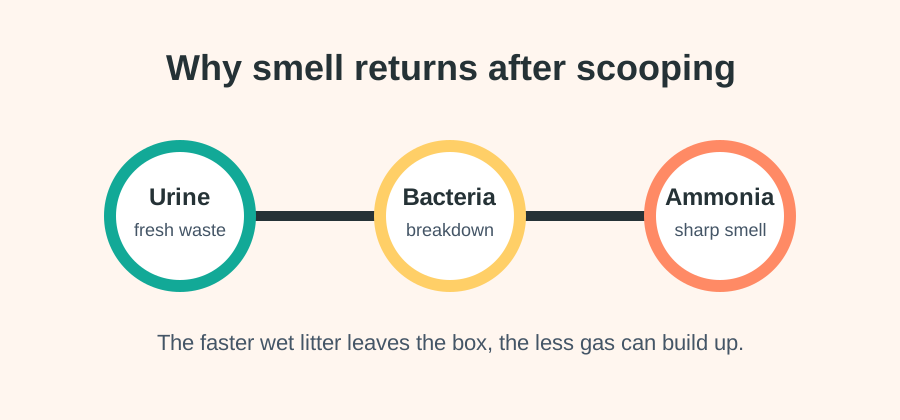
Fresh cat urine barely smells. What comes out of the cat is mostly water and urea, and urea on its own is close to odorless. The stink arrives later, when ordinary bacteria get to work on it and release ammonia gas. That is why the box can seem fine at breakfast and knock you sideways at dinner.
So ammonia is a clock, not a verdict on your litter. It measures how long something wet has been sitting where bacteria can reach it. The longer the gap between the cat using the box and you taking that urine out, the sharper the room gets. If you want the full chemistry behind it, we walk through the whole cycle in why litter boxes smell so bad.
Once you read the smell that way, the fix stops being a shopping question. It becomes a search: what in this room is still wet, and how long has it been like that?
Where the Ammonia Is Coming From
Six culprits cover almost every ammonia complaint. Work down the list in order. The early ones are free and take a minute.
A clump that fell apart
You scooped, the clump crumbled, and wet crumbs stayed behind. Those crumbs keep producing gas even though the box looks scooped.
Litter that is too shallow
Thin litter lets urine punch straight through to the bottom of the box instead of balling up where you can lift it out.
Urine that reached the plastic
Once the pan itself is holding urine, no amount of scooping helps. The box smells even when it is empty.
Too many cats, too few boxes
A single box serving several cats never gets a dry period. It is wet all day, so it gasses all day.
A hood trapping the gas
A cover does not remove ammonia. It concentrates it, then hands you the whole cloud when you lift the lid.
Litter long past its change date
Old litter loses the ability to lock urine into clumps. Every new visit soaks into what is already there.
Numbers three and five have their own guides: plastic that smells like urine after washing and covered versus uncovered boxes. For number six, check your schedule against how often to change cat litter.
The Five-Minute Diagnosis
Do this before you buy anything. It tells you whether you have a scooping problem, a plastic problem, or a room problem, and those three take completely different fixes.
Scoop the box completely, right now. Take out every clump and every solid. Go slowly so nothing crumbles on the way to the bag.
Rake the litter with the scoop, front to back. Wet crumbs and hidden pockets will show themselves. Lift those out too.
Push the litter aside in two or three places and look at the bottom of the pan. Damp litter sitting against plastic is your answer.
Take the bag outside straight away, then come back in and smell the room again. Give it ten minutes with a window open.
Still sharp? Empty the box entirely and smell the bare plastic. If the empty box smells, the pan is the source, not the litter.
Empty box smells clean but the room does not? Get on your knees near the box and check the floor, the wall behind it, and the mat.
Most people find their answer at step two or step five. If the box passed every check and the room still smells, you may be chasing something that is no longer there at all, which is common enough that we wrote a whole guide on phantom urine smell.
Fix It In This Order
Ammonia responds to sequence. Do the cheap, fast things first, because they solve most cases and they also make it obvious whether anything else is wrong.
- Scoop twice a day for a week. Morning and evening, no exceptions. One week is long enough to judge whether timing was the whole story.
- Bring the litter back to 3 to 4 inches. Deep enough that urine balls up before it hits the bottom.
- Wash the box properly. A rinse is not a wash. Follow the deep clean walkthrough so you are not just spreading the residue around.
- Open the room up. Ammonia is a gas. A cracked window or a fan pointed away from the box moves it out instead of letting it pool in a corner.
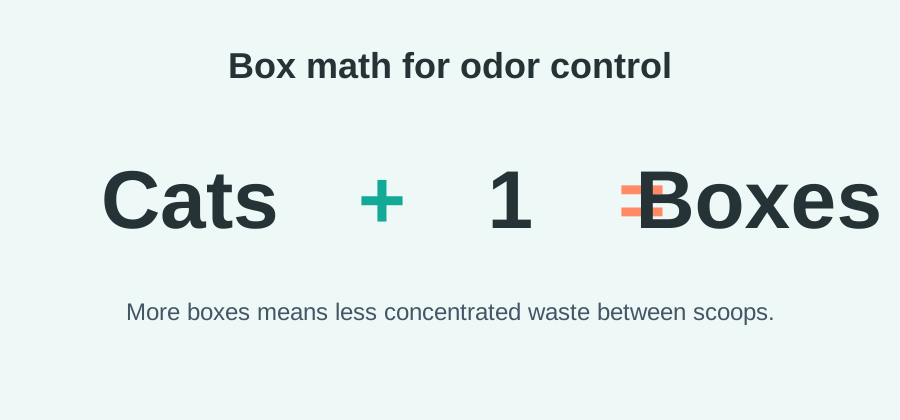
- Add a box if you have added a cat. More cats through one pan means it never gets a chance to dry. See the multi-cat guide for the box math.
When the Litter Itself Is the Limit
Say you have scooped twice a day for a week, the pan is clean, the room has airflow, and there is still an edge in the air by evening. Now the litter is a fair suspect. The thing to look at is not the fragrance on the label. It is whether the clumps hold together when you lift them.
A litter that crumbles hands you a problem twice a day: you think you removed the urine, and you removed most of it. The rest stays. That leftover is what keeps producing ammonia through the afternoon. Firm clumping, unscented, low enough dust that you are willing to scoop it properly. That is the shortlist. Our full breakdown of which litter types hold up is in best cat litter for ammonia smell, which covers the buying side of this same problem.
Perfumed litter deserves its own warning. Fragrance does not remove ammonia, it sits on top of it, and the combination is often worse than the smell you started with. Plenty of cats also dislike it enough to start going elsewhere, which turns an odor problem into a carpet problem.
When Purrify Fits
Purrify is an activated carbon additive you sprinkle onto clean litter. Carbon traps odor molecules as they come off, so it helps in the gap between scoops. It is not a substitute for taking the urine out, and it will not rescue a box that needs washing. Use it once the routine is solid and you want the room to stay neutral between visits.
See Purrify (our product)When Ammonia Deserves More Than a Scoop
A faint smell as you pass the box is normal life with cats. A room that stings is a different situation and should be dealt with the same day.
Your eyes water or your throat catches when you walk in. Ventilate first, clean second.
Someone in the home has asthma or another breathing condition. Do not let a stinging box wait.
The smell is strongest away from the box, near a wall or under furniture. Look for a spot outside the box.
The box is in a closed bathroom, closet, or laundry nook with no air movement at all.
You are pregnant or immune compromised. Handling advice is in our pregnancy safety guide.
Your cat has changed how often or how much it urinates. That is a vet call, not a cleaning call.
We keep the exposure and irritation detail in one place: is cat litter smell harmful to humans. If you need the room fixed before company arrives, start with the emergency cleanup.
FAQ
Why does my litter box smell like ammonia?
Because urine has been sitting long enough for bacteria to break it down. Fresh cat urine is nearly odorless. The sharp ammonia smell shows up hours later, once that breakdown is under way, so the smell is really a clock telling you how long something wet has been in the box.
How fast should the ammonia smell go away after I clean?
If the source was a clump you missed, the room usually clears within an hour once the clump is out and the air is moving. If the smell survives a full scoop and a fresh top-up, the urine has reached something you did not wash: the plastic, the mat, the floor beside the box, or the wall behind it.
Is the ammonia smell from cat litter dangerous?
A whiff as you walk past is not the same as a room that makes your eyes water. Strong ammonia can irritate eyes, nose, and airways, which is why a box that stings should be cleaned and ventilated rather than covered with fragrance. If anyone in the home has asthma or another breathing condition, treat a stinging box as urgent.
Will a different litter stop the ammonia smell?
Sometimes, but only after the routine is fixed. A litter that forms firm clumps lets you remove all the urine in one piece instead of leaving wet crumbs behind, and that alone can end the problem. Switching litter while still scooping once every few days rarely changes anything.
Why is the ammonia smell worse in the morning?
Overnight is the longest stretch the box goes untouched, and most homes are shut up tight while everyone sleeps. Longer sitting time plus no air movement equals the worst smell of the day right when you walk into the room.
Compare the Full Product Stack
For broader buying options, use the cat litter comparison. For odor at the source, see Purrify's carbon additive.
Keep Going
The nearest guides to this one, in the order most people need them.