Phantom Cat Urine Smell
It hits you in the hallway. You stop, sniff around, find nothing, and walk on. Two hours later it is back. This is one of the most maddening cat problems there is, and it has a method.
Disclosure: Purrify is our product, and we may benefit if you buy it. Details

The Smell Is Real. The Mystery Is Location.
Start from the assumption that your nose is right. In almost every case there is a genuine spot, it is just somewhere you do not look: below eye level, behind something heavy, or on a vertical surface you never think to check.
Here is the part that makes it feel supernatural. Dried urine is not gone urine. The water evaporates and the smelly residue stays put in the fibres, the grout, or the paint. On a dry day it barely registers. Add warmth or humidity and the same spot starts broadcasting again. That is why the smell seems to follow the weather, the heating, or a shower running down the hall, and it is why so many people conclude there is nothing there.
If the smell is sharp and chemical rather than sweetish and stale, you may be dealing with an active source instead of an old one. That is a different search, and it starts at the box: ammonia smell from the litter box covers it.

The Places It Actually Hides
Ranked roughly by how often they turn out to be the answer. Check them in this order and you will usually stop before the end.
The mat under the box
Litter mats trap tracked-out granules that were damp when they landed. The mat itself becomes the smell, and nobody washes a mat.
The wall behind the box
Cats that stand and aim send urine up the wall or the baseboard, well past the edge of the pan. Look higher than you expect.
The pan itself
Scratched plastic holds residue that survives a rinse. If the empty box smells, that is your source.
The floor seam beside the box
Liquid runs to the nearest gap: grout lines, board edges, the strip under a doorway. It soaks in and stays.
Soft furniture near the box
A curtain hem, a chair skirt, or the bottom of a couch will wick urine upward and hold it for months.
The waste bin
A bag of scooped clumps sitting in a warm kitchen bin can out-smell everything else in the house.
Shoes, bags, and laundry piles
Anything left on the floor near a box is fair game, and it moves around the house with you.
The scoop and its holder
Rarely washed, always damp, usually parked right next to the box.
A warm-air vent nearby
A spot on or near a vent gets pushed around the whole house whenever the system runs, which is why the smell seems to be everywhere.
How to Actually Find It
Standing in the middle of a room sniffing the air does not work. Smell sits low and it fades from your own nose within a minute. These six moves fix both problems.
Reset your nose. Go outside for five minutes, then come back in and walk your usual route without stopping. The first ten seconds inside tell you more than an hour of searching.
Get low. Kneel and work along the floor, nose about a hand-width above it. Most people find the spot within two minutes of doing this and are annoyed they did not try it sooner.
Warm the suspect area. A hair dryer on low for thirty seconds over a patch of carpet will make a dormant spot speak up. Warmth is your amplifier.
Turn out the lights and use a UV blacklight. Dried urine usually glows. Mark anything that lights up with a sticky note and confirm it by smell up close.
Do the paper towel test. Press a white paper towel hard onto the suspect spot for a few seconds, then smell the towel. It concentrates what the floor is holding.
Move the furniture. Not tilt it. Move it. The answer is behind the heavy thing more often than anyone wants it to be.
Cleaning It So It Stays Gone
Finding the spot is most of the work. Getting rid of it takes one specific thing and avoids two common mistakes.
- Use an enzyme cleaner. General household cleaners lift the stain and leave the smell. Enzyme cleaners break down the residue that is doing the smelling.
- Soak wider than the stain. Urine spreads as it sinks, so treat a generous margin around whatever you can see and let the cleaner sit as long as the label says.
- Blot, do not scrub. Scrubbing drives residue deeper into carpet backing and pad, which is how a small spot becomes a permanent one.
- Skip anything ammonia based. To a cat, ammonia smells like a previous visit, which is an invitation to go there again.
- Let it dry fully before judging. Damp cleaner smells like nothing. Come back the next day and check properly.
If the source turned out to be the box itself, the wash routine that actually strips residue is in the deep clean guide, and plastic that smells like urine after washing covers the case where washing has already failed.
When It Is Not Old Urine At All
A few household smells get mistaken for cat pee often enough to be worth ruling out before you tear up a carpet. A slow drain, a fridge drip tray, a damp towel balled up in a hamper, or standing water in a plant saucer can all read as sour and sharp in a closed room. So can a washing machine that has been left shut.
There is also the honest possibility that the box is fine, nothing is hidden, and your nose has simply been trained by weeks of the same smell to expect it. Ask someone who does not live with you to walk through the house cold and tell you what they notice. It is the cheapest test available and it settles the question quickly.
If you are the only person who ever smells it, and you smell it in places your cats have never been, mention it to your doctor. We are not in a position to say more than that, and we would rather say nothing than guess.
One more angle worth knowing: whether a smell bothers you at all is partly about how long you are exposed and how well the room ventilates. Our explainer on cat litter smell and health sets out where the real caution belongs.
Stopping the Next One
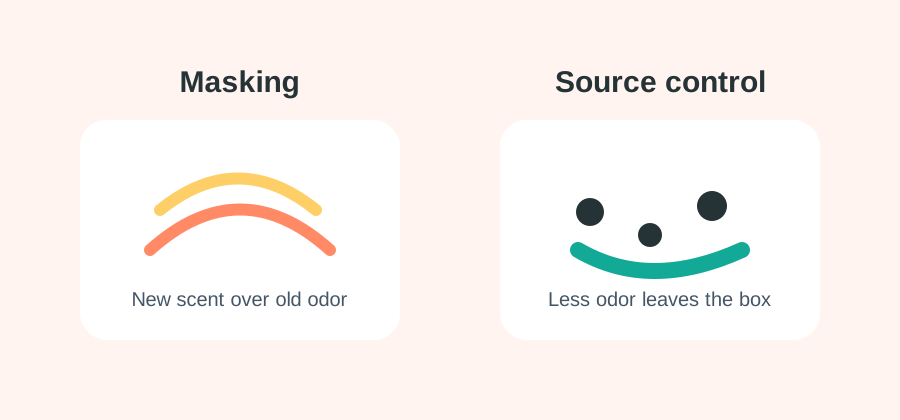
Phantom smells usually start as ordinary box smells that escaped into the room and settled somewhere. Keeping the box side quiet is the prevention. Purrify is an activated carbon additive that traps odor as it comes off the litter, so less of it drifts out to land on your curtains in the first place. It works alongside regular scooping rather than replacing it.
See How Carbon Traps Box OdorFAQ
Why do I smell cat pee when there is nothing there?
Almost always because dried urine is still there and you cannot see it. Dried urine does not disappear, it just stops being obvious. Warm, damp air brings the smell back, which is why the same spot can be silent in the morning and loud by evening.
Why does the smell come and go?
Humidity and heat are the usual switches. A closed room on a hot day, a running shower, a wet mop, a radiator coming on: any of these can wake up a spot that has been quiet for weeks. If the smell tracks the weather rather than the litter box, look for a dried spot rather than a fresh one.
Can I find old cat urine with a blacklight?
Often, yes. Dried urine tends to glow under UV light in a dark room, and it is the fastest way to check a large floor or a wall. It is not perfect. Some cleaners, lint, and finishes glow too, so confirm anything you find by smelling that exact spot up close.
I cleaned the spot and the smell came back. Why?
Either you cleaned the visible edge and missed the wider soaked area underneath, or you used a general cleaner instead of an enzyme cleaner. Urine soaks outward and downward, so the stain you can see is usually smaller than the area that smells.
What if I am the only one who smells it?
First rule out a real source that only you happen to walk past, such as a shoe, a bag, a laundry pile, or a spot near your side of the bed. If nobody else can smell it anywhere, and you smell it in places your cats have never been, mention it to your doctor. That is outside what we can help with.
Company Coming?
If you need the room usable in the next hour rather than the next week, work through the emergency cleanup first, then come back and hunt the spot properly.
Compare the Full Product Stack
For broader buying options, use the cat litter comparison. For odor at the source, see Purrify's carbon additive.
Keep Going
Where to go next, depending on what your search turned up.