Baking Soda in Cat Litter: Does It Actually Work?
It is the oldest litter box trick there is, and it is not useless. It is just doing a smaller job than most people think.
Disclosure: Purrify is our product, and we may benefit if you buy it. Details
What Baking Soda Actually Does
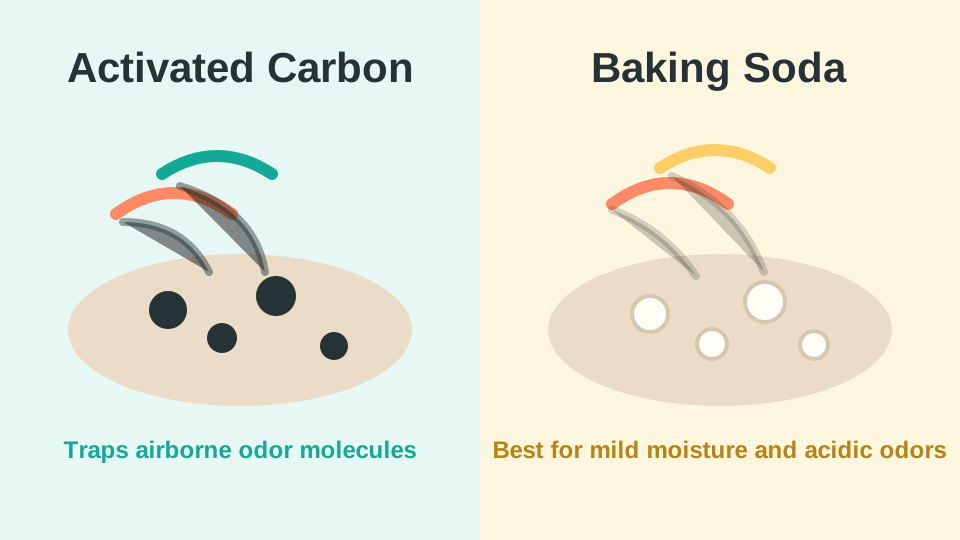
Baking soda is sodium bicarbonate. It works by reacting with acids and turning them into something that does not smell, which is why it earns its keep in a fridge full of sour milk and old cheese. Fridge odors are largely acidic. It also absorbs a small amount of moisture, which slows things down a little in a damp box.
Here is the catch, and it is the whole story. The smell that drives people out of a room is ammonia, and ammonia is alkaline. Baking soda neutralises acids. It is not built for the one thing you most want gone. It can still take the edge off the mixed odors sitting alongside the ammonia, so the box seems fresher for a while, but the main offender walks straight past it.
If you want the chain of events that turns a normal visit to the box into a sharp smell in the hallway, we lay it out in why litter boxes smell so bad.
The Honest Scorecard
Cheap and everywhere
A box costs less than a coffee and every grocery store has it. Nothing else on this page beats that.
Good on fresh odor
It neutralises acidic smells and pulls in a little moisture, so a clean box stays pleasant slightly longer.
Weak on ammonia
Ammonia is alkaline. Baking soda neutralises acids. The chemistry simply does not line up for the smell people complain about most.
Short working life
It is spent once it has reacted, and digging buries it away from the wet spots within a day or two.
Two real strengths, two real limits. That is a fair trade for something this cheap, as long as you are not expecting it to carry the whole box.
How to Use It Properly
Almost everyone uses baking soda in the way that works least well. Do it in this order instead.
Start with a clean box. Baking soda on top of an old, soured box is decoration.
Dry the box completely. Damp plastic turns baking soda into a crust that does nothing.
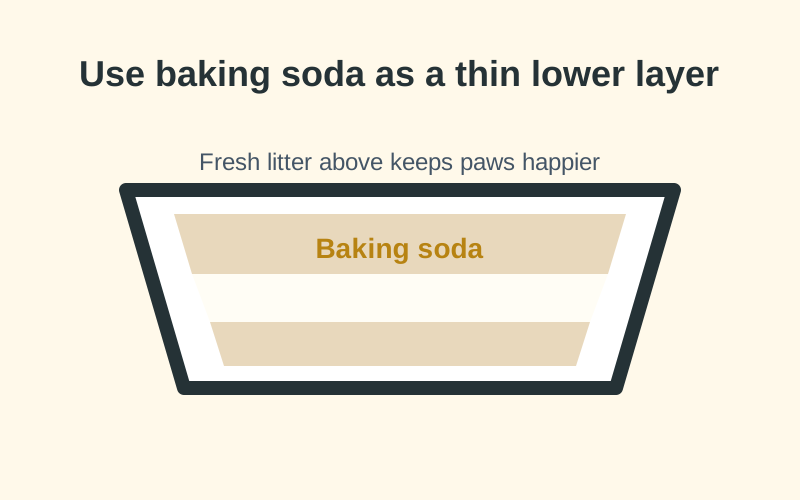
Dust a thin, even layer across the bottom. You should still see the plastic through it.
Add 3 to 4 inches of fresh unscented clumping litter on top, so urine never reaches the bottom.
Scoop on your normal schedule. Baking soda is not a reason to scoop less, and treating it like one is the mistake that makes boxes worse.
Refresh it at the full change, not by tipping more baking soda into a box already in use.
Step one carries most of the weight. If the empty box still smells once it is washed and dry, the plastic itself is holding old odor and no additive will get past that. Our deep clean walkthrough covers how to strip it, and what will quietly damage the box if you use the wrong thing.
Where Activated Carbon Takes Over
Activated carbon does not need a chemical partner. Its surface is full of tiny pores, odor molecules move into them and stay put, and that works on a much wider range of smells than an acid reaction does. Ammonia included.
It also holds up longer in a working box, because it is trapping rather than being consumed by a reaction. That is the practical difference you notice on day four, when the baking soda has gone quiet and the room is starting to turn again.
We put the two head to head in activated carbon vs baking soda for cat litter, including where baking soda still wins on price and availability.
Five Ways People Get It Wrong
Sprinkling it over the surface. Your cat buries it within an hour and it never meets the urine.
Using a thick layer to get a stronger effect. You get dust in the air and a cat that starts eyeing the carpet.
Mixing it right through the litter. It clogs clumping action, so clumps break when you scoop and wet pieces stay behind.
Adding it to a box that already smells. It is a maintenance helper, not a rescue.
Using scented baking soda products near the box. Perfume plus ammonia is the combination most people find worst.
The scented-product one deserves a flag. Cats notice a changed box far more than we do, and a cat that decides the box is unpleasant finds somewhere else to go. If fragrance is already part of your setup, read the case for unscented litter before adding anything else with a smell to it.
When Baking Soda Is Not Enough
If you are already scooping twice a day, the box is clean, and the room still turns by the evening, the missing piece is something that holds odor rather than reacting with it. Purrify puts activated carbon in the litter so odor is caught in the box instead of in the room. It is sold in bags, holds a 5.0 Google rating, and is stocked in more than 40 pet stores across Canada.
See the Activated Carbon OptionSo Should You Bother?
Yes, if you use it as a small assist under fresh litter in a clean box, and you keep your expectations honest. It costs almost nothing and it buys you a slightly better first few days.
No, if you are hoping it rescues a box you are behind on. Nothing you sprinkle in fixes a timing problem. When the smell is sharp and eye-watering rather than merely stale, that is ammonia asking for a different answer, and the ammonia setup guide is the right next stop. If you need the room presentable tonight, start with the quick fixes.
FAQ
Does baking soda work in cat litter?
It helps a little and it fades fast. Baking soda neutralises acidic odors and soaks up some moisture, which takes the edge off a fresh box. It does much less for the ammonia smell that builds as urine breaks down, because ammonia is alkaline rather than acidic.
How much baking soda should I put in cat litter?
A thin dusting across the bottom of a clean, dry box before you add litter. More is not better. A thick layer creates dust when your cat digs and can put some cats off the box entirely.
Is baking soda safe for cats?
Used in a small amount under the litter, it is a common household practice. Avoid heavy layers that raise dust, watch how your cat reacts, and stop if your cat starts avoiding the box or if anyone in the home is sensitive to dust. Ask your vet if you have any concern about your individual cat.
Why does baking soda stop working after a few days?
It gets used up and it gets buried. Once it has reacted with what it can reach, it is done, and normal digging pushes it away from the wet spots where the odor is actually coming from.
Is activated carbon better than baking soda for litter?
For lingering odor, yes, because carbon traps odor molecules by adsorption rather than needing an acid to react with. Baking soda is cheaper and easier to find. We compare them side by side in our activated carbon vs baking soda guide.
Compare the Full Product Stack
For broader buying options, use the cat litter comparison. For odor at the source, see Purrify's carbon additive.
Pick the Right Odor Tool
Baking soda is one option among several. These guides cover the rest, and the routine that makes any of them work.