Do Air Purifiers Help With Cat Litter Smell?
People buy one hoping it makes the litter box a non-issue. It makes the room better. That is not the same thing, and knowing the difference saves you a few hundred dollars.
Disclosure: Purrify is our product, and we may benefit if you buy it. Details
Two Different Problems Wearing One Name
"Litter box smell" is really two things happening at once, and a purifier is excellent at one of them and weak at the other.
The first is particles. Dust thrown up when your cat digs, loose hair, dander, tiny bits of dried litter tracked across the floor. Those float, and a HEPA stage catches them well. If your problem is a dusty, sneezy room near the box, a purifier is a genuinely good purchase.
The second is gas. Ammonia comes off as waste breaks down in the box, and gas molecules go straight through a particle filter the way wind goes through a tennis net. The only part of a purifier that grabs gas is the activated carbon stage, and on most machines that stage is thin. We cover where the gas comes from in why litter boxes smell so bad.
So the honest version is this. A purifier makes a room with a cat in it noticeably cleaner to breathe. It takes the edge off odor. It does not make a neglected box smell like nothing, and no machine sold at any price will.
What It Does and Does Not Do
Catches litter dust
Fine dust kicked up when your cat digs is a particle, and particles are what a HEPA stage is built for.
Catches hair and dander
The floating stuff that settles on every surface near the box. A purifier is genuinely good at this.
Barely touches ammonia
Ammonia is a gas. It slips through a particle filter. Only the carbon stage has any hold on it.
Never cleans the box
Odor keeps being made at the source. The machine is always working from behind.
The Carbon Stage Is the Only Part Fighting Odor
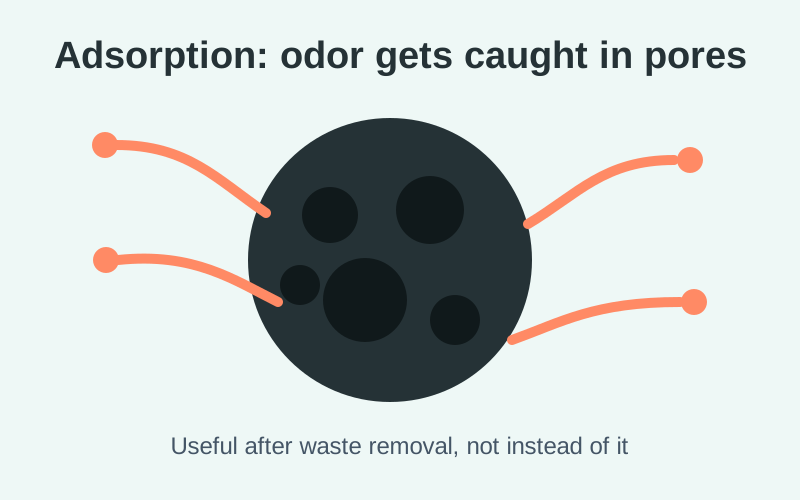
Activated carbon works by adsorption. Its surface is riddled with tiny pores, odor molecules stick inside them, and they stop travelling. That is the same principle whether the carbon sits in a filter cartridge or in the litter itself.
Which raises the obvious question. If carbon is the part that handles odor, why put it across the room instead of in the box, where the odor is being made? A filter has to wait for the smell to reach it. Carbon in the litter meets it at the source.
There is also a limit worth knowing. Carbon fills up. Once the pores are occupied, the media stops working, and the machine gives you no signal at all. It hums along exactly as before while the smell quietly returns.
If You Are Going to Buy One, Check These Six Things
Check that it has a real activated carbon stage, not a thin grey sheet glued to the HEPA filter. Weight of carbon is what does the work.
Match the machine to the room size. An undersized unit in a large room runs all day and changes very little.
Look up what replacement filters cost and how often they are due, before you buy. That number is the real price.
Run it on a setting you can live with. A purifier on its quiet setting all day beats one on high that you switch off because of the noise.
Skip anything that works by generating ozone. Regulators warn against deliberately adding ozone to indoor air.
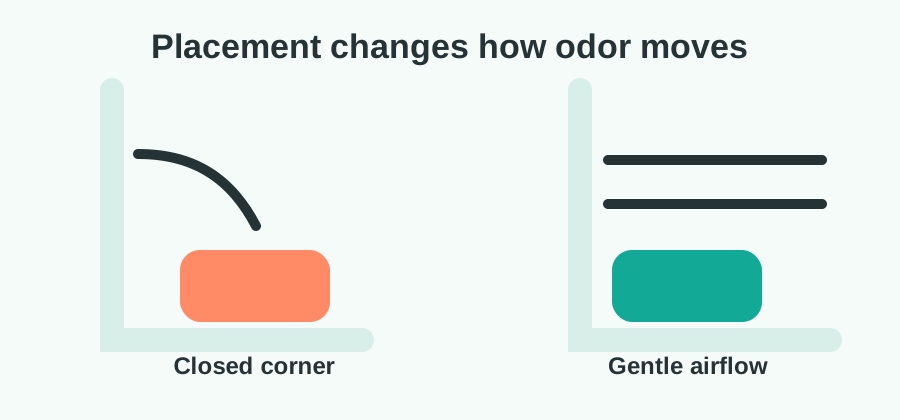
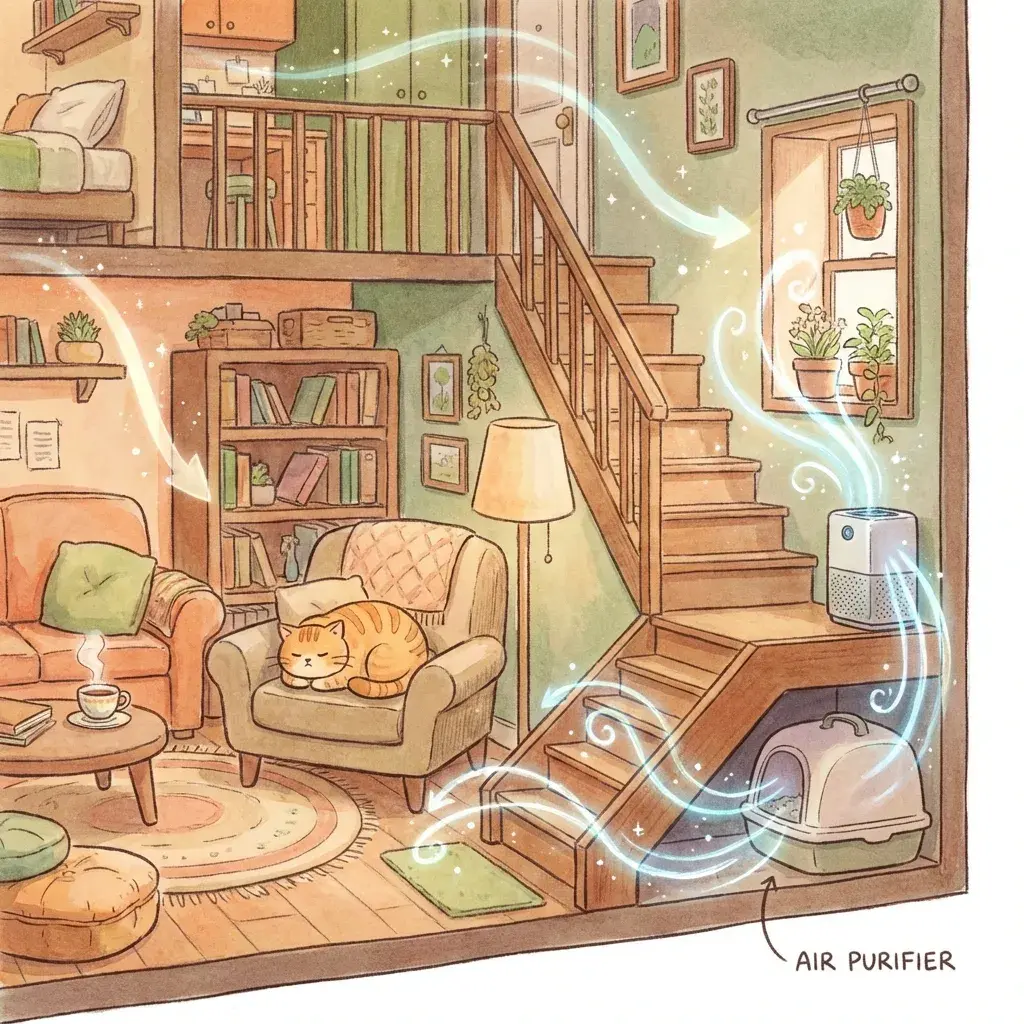
Give it clear space. Against a wall or behind a sofa, it is filtering the corner it is standing in.
One more placement note. Do not aim the outlet at the litter box. Blowing air across a box pushes odor out into the room faster than the machine can draw it back in, which is a small mistake that makes a purifier look useless. The same airflow logic applies to hoods, covered in covered vs uncovered litter boxes.
Do This Before You Spend the Money
Most people who buy a purifier for litter smell would have got a bigger result from a free afternoon of work. Run this first, then decide what is left over.
Empty and wash the box. If the plastic smells when the box is empty and dry, no machine in the room will fix that.
Refill with 3 to 4 inches of fresh unscented clumping litter so urine never reaches the bottom.
Scoop twice a day for a full week and judge the room after that, not before.
Open a window on the far side of the home for ten minutes a day, so the air is replaced rather than recirculated.
Only then decide whether the leftover smell is worth spending money on a machine.
Step one is the one that surprises people. Old plastic holds odor long after the litter is gone, and no amount of filtered air fixes a box that smells while it is empty. Our deep clean walkthrough has the method. If the smell arrived with the hot weather rather than gradually, read why litter smell gets worse in summer before buying anything.
Trap the Odor Where It Starts
Purrify puts activated carbon in the litter instead of across the room, so odor gets caught before it becomes a room-wide problem your machine has to chase. It works alongside a purifier rather than replacing it, and it does not replace scooping either. Purrify is sold in bags, holds a 5.0 Google rating, and is stocked in more than 40 pet stores across Canada.
See Carbon That Works Inside the BoxThe Honest Verdict
Buy a purifier if you want less dust, less floating hair, and easier breathing in a home with cats. That is a real benefit and it is worth paying for. Do not buy one expecting it to solve a litter box you are not keeping up with, because it will not, and you will blame the machine.
The order that works is boring and it works every time. Clean the box, get the litter depth right, scoop on time, move air through the home, trap what is left with carbon in the litter, and add a purifier for the particle side. For the additive comparison, see activated carbon vs baking soda, or browse the odor-control product comparison.
FAQ
Do air purifiers help with cat litter smell?
They help with part of it. A HEPA filter catches litter dust, hair, and dander. Only the activated carbon stage touches odor gas, and that stage has a limited working life. A purifier cleans the air in the room, but it never cleans the box.
Will a HEPA filter remove ammonia smell?
No. HEPA is built to catch particles, and ammonia is a gas. If a purifier is doing anything about the smell, it is the sorbent carbon stage doing it, not the HEPA layer.
Where should I put an air purifier for litter box smell?
In the same room as the box, out in the open, not pressed against a wall or tucked behind furniture. Do not aim the outlet straight at the box, because that pushes odor into the room faster than the machine can pull it back.
Is an air purifier better than fixing the litter box?
No. Cleaning the box removes the source. A purifier only treats what has already escaped into the room. Buy the machine after the routine is sorted, not instead of it.
Do I need to replace the carbon filter?
Yes. Sorbent media fills up and stops working while the machine keeps running and sounding normal. If odor creeps back after months of good performance, a spent carbon stage is the first thing to check.
Compare the Full Product Stack
For broader buying options, use the cat litter comparison. For odor at the source, see Purrify's carbon additive.
Fix the Source, Then Filter the Room
A purifier is the last step, not the first. These guides cover the steps that come before it.